Power and Policy in the United States. Fall 2013 Course Syllabus

Image

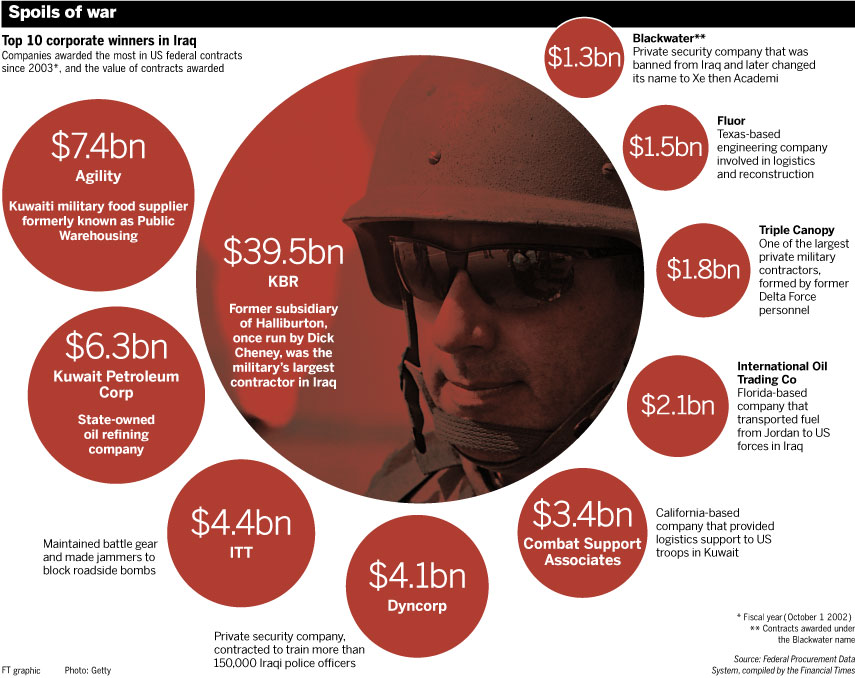
Financial Times Graphic, Iraq War 2003-2013.

This semester I am teaching a foundational Masters level course for our Masters of Public and International Affairs degree in the National Capital Region, Power and Policy in the United States. The course is a new preparation for me. The topic is enormous and there were many different ways in which I could have structured the course. In the end I choose to address the established and largely Sociology-based literature on ‘power structure’ research in the United States, a few aspects of the debate over the nature of the post-war US state and foreign policy making, and then use one specific policy question to bring the various themes and literatures together. The question I choose to focus our attention on was the following: why did the United States go to war against Iraq in 2003 (thus the attached graphic).

The ‘fat’ version of the syllabus, which includes supplemental readings, is attached here. GIA 5004 Power and Policy 2013 Fat Final Syllabus

Comments are welcome. It should be an interesting semester.

Posted in Congress, Constitution, Current affairs, Democracy, Dirty Wars, drones, George Bush, Israel, Jeremy Scahill, Obama, political system, special interests, state theory, Washington D.C. | 3 Comments

Airstrikes and Affect over chemical weapons use in Syria

It looks like the US and some allied countries, possibly France and the UK, are making preparations for limited military strikes against the infrastructure of the regime of Assad in Syria. No doubt this action will spark outrage among some, if not many, across the world.

The trigger for this action, of course, is the horrific indiscriminate chemical weapons attack against residents of what is frequently described as rebel strongholds in the suburbs of Damascus.

Conditioning the debate and interpretation of what will presumably be US lead military action are the ghosts of events past, of Halabja during the Iran-Iraq war, of Srebrenica in July 1995 at the end of the Bosnian war, of the PR use of Halabja by the Bush administration (10 years after the fact) to gin up the case for its invasion of Iraq in 2003.

The blunders of the Bush administration in Iraq have significantly crippled the moral legitimacy of the US to undertake any military action in Middle East (US drone attacks, ongoing in Yemen, have little international legitimacy though they enjoy support among most US citizens). Arguably, Syrian civilians are paying the price for this, in that there in no longer an ‘indispensable nation’ willing to lead an international coalition to advance a norm like “responsibility to protect.” Some, however, will argue that R2P was never more than a fig leaf for Great Powers pursuing narrow national interests in the garb of ‘humanitarianism’.

But there is now an older international norm at stake in Syria, one with echoes all the way back to the First World War. This involving the prohibition of chemical weapons, in war and most especially against civilians. As the horror videos from last week’s event make clear (and the power of visual documents like these to induce an affective geopolitics needs careful explication), this norm has now been breached. The event has ceased to be simply another round of brutality in the Syrian civil war. It has ‘jumped place’ and become an international outrage, a ‘moral obscenity’ in Secretary Kerry’s words. The issue is an existential one, his citation of his identity as a father underscoring this. For my own part, this aspect resonated profoundly. Watching those videos is deeply painful as a parent.

So does this leave us with a situation where the US, and morally sentient global citizens, have a justification for morally righteous violence against the presumed perpetrators? Is this affective geopolitical disposition equivalent to that deployed during the Bush years? These are important questions, it seems to me, but I am inclined to suggest that there is a defensible moral justification for the use of military force in this case and, second, that this is different from the affective geopolitics prevalent during the Bush 43 years which were much more unilateral and nationalistic. But these are early days in asking questions about these unfolding events.

Posted in Affect, Bosnia, Current affairs, genocide, Syria | Tagged , | 3 Comments

The Rhetorical Trap in US Foreign Policy

The horrific events in Egypt these past days, and past month, have placed a persistent dilemma in US foreign policy to the fore once again. What does the US do when its ‘national interest’ or ‘strategic imperatives’ and ‘military logic’ dictate one policy direction while its ‘ideals,’ ‘values’ and ‘moral commitments’ suggest another? The inverted commas are necessary, of course, because the framing of the question thus, and what is grouped under ‘national interest’ as opposed to ‘values’ is a product of fluid contextual discursive formations and power relations.

The current dilemma in Egypt is ostensibly straightforward. The US state has long had a so-called “strategic relationship” with the Egyptian military, which has long dominated, as a corporatist military-economic nexus, that state. Yet the US government nominally supports the expansion and flourishing of democratic regimes. In his Cairo speech of 2009, Obama put it thus:

No system of government can or should be imposed by one nation by any other.That does not lessen my commitment, however, to governments that reflect the will of the people.  Each nation gives life to this principle in its own way, grounded in the traditions of its own people.  America does not presume to know what is best for everyone, just as we would not presume to pick the outcome of a peaceful election.  But I do have an unyielding belief that all people yearn for certain things:  the ability to speak your mind and have a say in how you are governed; confidence in the rule of law and the equal administration of justice; government that is transparent and doesn’t steal from the people; the freedom to live as you choose.  These are not just American ideas; they are human rights.  And that is why we will support them everywhere.  (Applause.)
Now, there is no straight line to realize this promise.  But this much is clear:  Governments that protect these rights are ultimately more stable, successful and secure.  Suppressing ideas never succeeds in making them go away.  America respects the right of all peaceful and law-abiding voices to be heard around the world, even if we disagree with them.  And we will welcome all elected, peaceful governments — provided they govern with respect for all their people.
This last point is important because there are some who advocate for democracy only when they’re out of power; once in power, they are ruthless in suppressing the rights of others.  (Applause.)  So no matter where it takes hold, government of the people and by the people sets a single standard for all who would hold power:  You must maintain your power through consent, not coercion; you must respect the rights of minorities, and participate with a spirit of tolerance and compromise; you must place the interests of your people and the legitimate workings of the political process above your party.  Without these ingredients, elections alone do not make true democracy.
AUDIENCE MEMBER:  Barack Obama, we love you!

Thereafter the so-called Arab Spring forced a choice upon the administration and it moved towards embracing the ‘revolution’ and dialogue with Islamicist parties in Egypt (but not in Bahrain). Peter Mandaville helped nudge this process forward in the State Department in an admirable way (see his ‘Unexceptional Islamicist’ essay in Foreign Policy). But then the Muslim Brotherhood captured the presidency and it began to trample over other democratic norms and practices, institutionalizing sectarianism within the constitution. With the old political economy under profound challenge, the counter-revolution began and organizationally mobilized significant public support, ‘legitimizing’ the resultant military coup. “Elections alone do not make true democracy” but military coups against democratically elected leaders are hard to defend. For legal legislative reasons US political officials are now in the absurd situation of where they dare not speak the words ‘military coup.’

Is Egypt today an instance of normative rhetoric trapping US policy makers in positions that undermine their credibility, and expose the gap between ‘ideals’ and ‘strategic interests’ in the making of foreign policy? I’m not so sure if you read Obama’s text closely but the glib version — US supports military, then democracy, then military — is damning.

A rhetorical trap is clearer in other instances.

Earlier this month was the fifth anniversary of the August War of 2008, an event I’m writing a book on. Here a case can be made explicitly for a rhetorical trap and, some might argue, the abandonment of friends as the Saakashvili’s government was left to face a Russian military invasion on its own. Only Bill Kristol, to my knowledge, actually called for the US to ‘defend the sovereignty’ of US friend and GWOT ally Georgia. Senator McCain never suggested that the US actually go to the military aid of the Georgians. In the Georgian case, some US officials might respond that the Georgian government brought this upon itself by its own actions. There is more to it than this.

There are even stronger cases of a rhetorical trap and the US ‘abandoning friends’:

  • After the Gulf War of 1991, President George H.W. Bush, urged Iraqis to rise up in opposition to the rule of Saddam Hussein. Shia in Basra and Kurds in the North did so, and were crushed, triggering the scrambling response Operation Provide Comfort for the Kurds in the north that eventually gave rise to Iraqi Kurdistan (now the KRG).
  • Upon assuming power the administration of President Eisenhower, with John Foster Dulles as Secretary of State, frequently called for the ‘liberation’ of the ‘captive peoples’ of Eastern Europe. An increasingly elaborate infrastructure of propaganda and covert activities pursued their policy of strong ‘rhetorical diplomacy’ against Soviet control. In 1956 RFE/RL issues some incendiary broadcasts which gave Hungarians the impression that they would be aided if they rose up against their Soviet occupiers. They did and were crushed.

In 1992 I helped lead a Geography fieldtrip to Budapest, a city I first visited in 1990, which focused on the spaces of the 1956 uprising. Since then I’ve had a strong interest in the event (bolstered by meeting some emigres who fled; Kati Morton, Holbrooke’s last wife, is one and features in the documentary Freedom’s Fury on the famous ‘blood in the water’ waterpolo match). Chris Tudda’s The Truth is Our Weapon: The Rhetorical Diplomacy of Dwight D. Eisenhower and John Foster Dulles (Louisiana State University, 2006) is a compelling study of the how Ike and Dulles envisioned fighting the Cold War in Eastern Europe, with a fascinating chapter on 1956. Tudda defines ‘rhetorical diplomacy’ as the practice of Ike and Dulles to give hectoring, bellicose and ideological speeches (what he terms ‘inflammatory rhetoric’) against Soviet influence in Eastern Europe. Yet, he establishes that both Ike and Dulles held policy positions in private, and in confidence even from Western European allies, that diverged significantly from their public rhetoric. Put bluntly, both Ike and Dulles accepted the reality of Soviet domination of Eastern Europe but they never admitted this in public, suggesting instead the very opposite. In the 1956 case, this generated a rhetorical trap, and a very sorry episode in Cold War history.

All of these cases have their complexities but it can be argued that there is one commonality: the illegitimacy of ‘realism’ in US geopolitical culture. US political leaders are addicted to rhetoric that soars, and that all too frequently produces severe legitimacy crises like we see today.

Posted in Current affairs | 1 Comment

Just a River Runs Throught It? Transnistria, Moldova and Geopolitical Faultlines

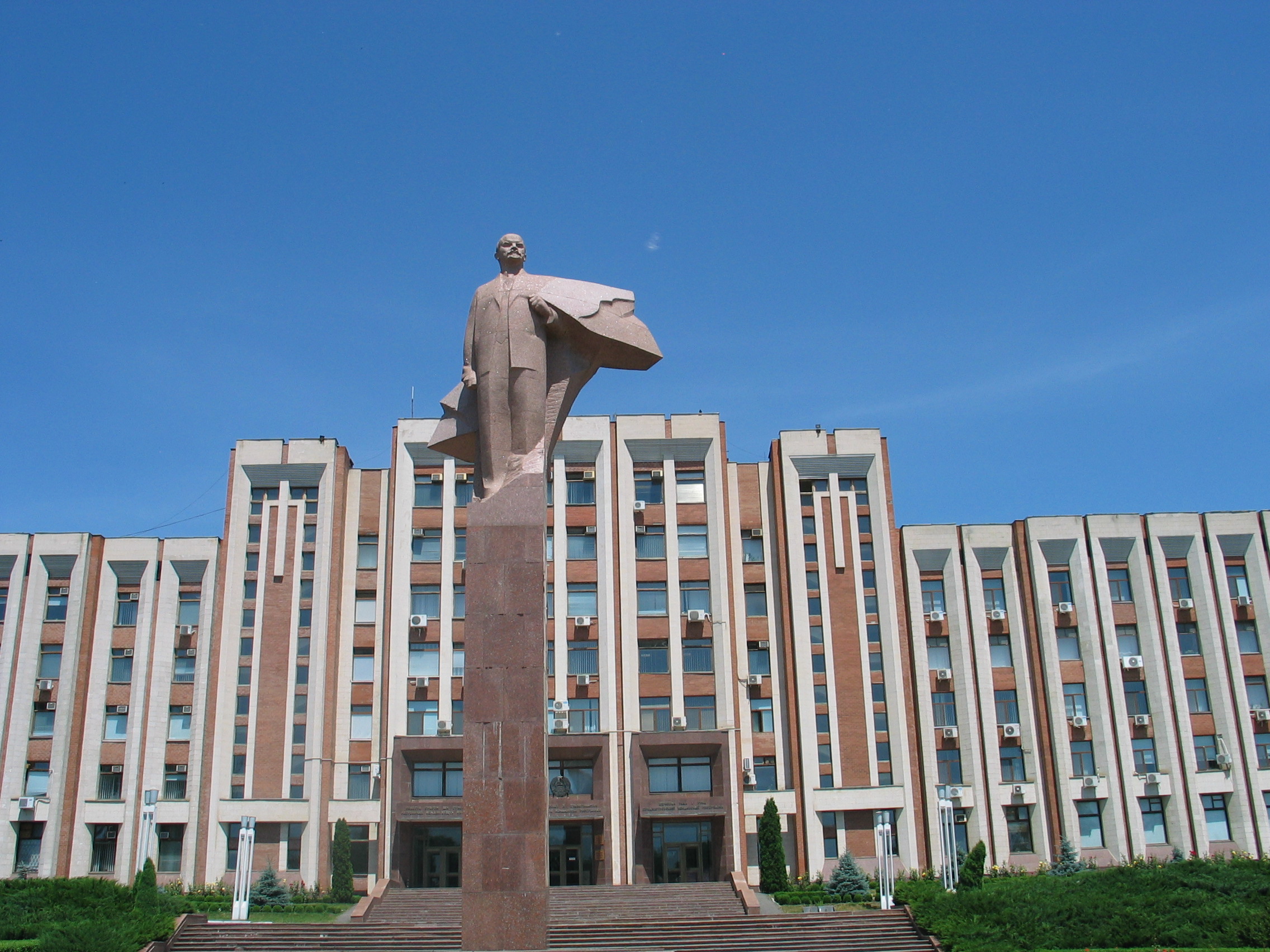
Superman Lenin outside the Transnistrian Supreme Soviet Parliament Building

Image

De Facto states are commonly viewed as pawns in a game of Great Power geopolitics. They often exist as a consequence of Great Power intervention and crucial support at consequential moments of crisis, disintegration and transition. They are often buttressed and sustained by considerable financial support from a Great Power. And they are often led by figures who make very public allegiance of their loyalty and identification with certain Great Powers. So it is not surprising that they are viewed as geopolitical objects, nor that the conflict between them and their parent states are interpreted as ‘geopolitical fault lines.’

But none of this tells us very much about the local circumstances of the territorial division that created the de facto state. Geopoliticizing de facto states can obscure important localized divisions, tensions and, also, commonalities.

The new issue of the Taylor and Francis journal Eurasian Geography and Economics features an article by John O’Loughlin, Rebecca Chamberlain-Creanga and I on Moldova and Transnistria entitled “Divided Space, Divided Attitudes? Comparing the Republics of Moldova and Pridnestrovie (Transnistria) using Simultaneous Surveys.” It is the first publication from the US National Science Foundation supported De Facto State Research Project on the case of Transnistria, one of the four Eurasian De Facto States this project examines. JohnO, Vladimir Kolossov and I visited both Moldova and Transnistria in June 2009, and contracted scientific surveys in both locations that were completed nearly simultaneously in the summer of 2010. We matched about three-quarters of the questions so that the proportions choosing the various responses can be directly compared. In total, over 2000 respondents, composed of 1102 in Moldova and 976 in Pridnestrovie, were surveyed.

JohnO crunched the data and we first presented the results at a talk at George Washington University in 2011. Other pressing project work, however, slowed the write up of the results. To add grounded anthropological perspective to the survey results, we invited Rebecca Chamberalain-Creanga, a discussant of the original GWU presentation and recent Ph D in Anthropology at University College London, to contribute to the writing up process. Ralph Clem provided important commentary and editing suggestions as part of the refereeing process in EGE. The result is the long paper, 31 journal pages, that appears this week in the journal.

The argument of the paper, in short, complicates the notion that Moldova is riven by a deeply consequential geopolitical faultline. While the local and Great Power divisions that characterize this conflict are real and powerful, the attitudes of residents of both entities are quite similar in important respects. A river runs through it but that river is not manifestly a primordial geopolitical faultline.

Posted in Current affairs | Tagged , , , , , | Leave a comment

‘Cartographic Exhibitionism’ article on Armenia & Karabakh published

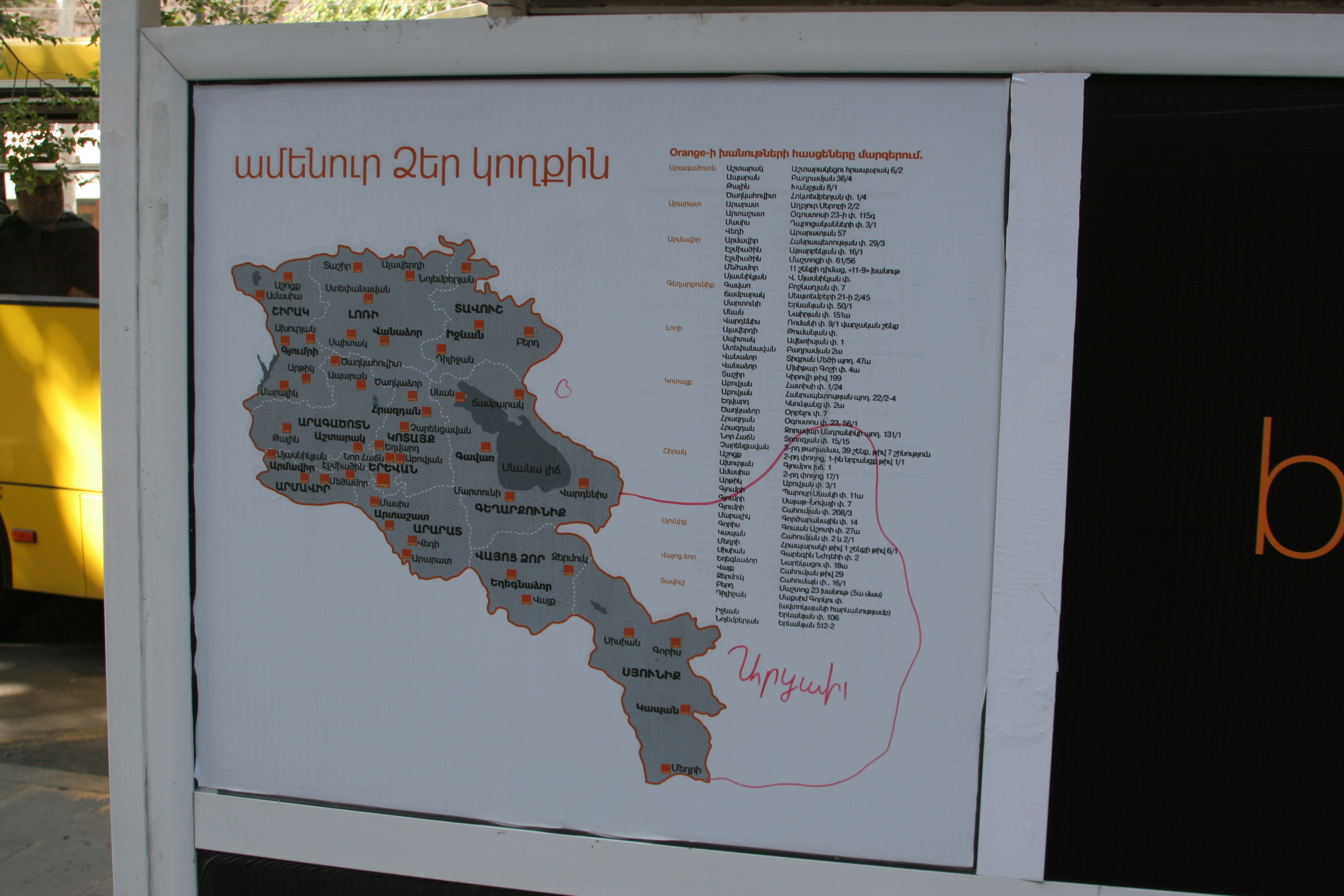
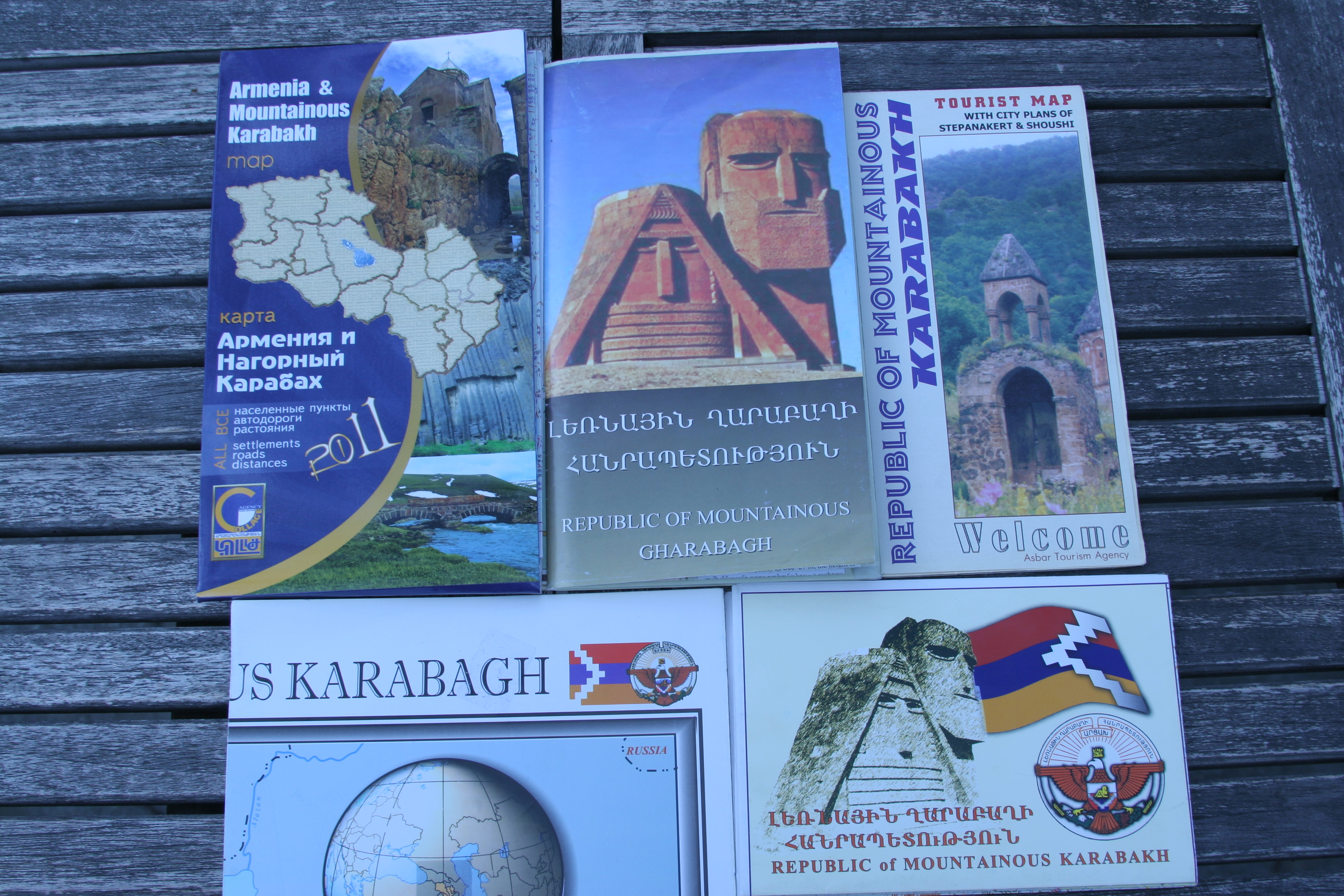
IMG_0020The journal Problems of Post-Communism (POPC) has just published an article I wrote with Laurence Broers entitled ‘Cartographic Exhibitionism? Visualizing the Territory of Armenia and Karabakh‘ (vol. 60, no. 3, May–June 2013, pp. 16–35). Laurence’s part time day job is Caucasus Project Manager for the British peace-building NGO Conciliation Resources. He is also a research associate in the Department of Political Studies at the School of Oriental and African Studies, London. He is lead author on the piece and writes as an independent academic not a Conciliation Resources employee (its content reflects our arguments and do not reflect the views of Conciliation Resources).

The paper has its origins in a conversation we had about the graffiti defaced mobile phone coverage maps we both photographed when independently visiting Yerevan in 2011 (see photo above). Every one of these advertizing maps I encountered across Yerevan, for Orange Armenia mobile service, were altered to extend the territorial body of Armenia beyond its recognized international borders to incorporate the historic Nagorno-Karabakh Autonomous Oblast (NKAO) and the surrounding territories seized from Azerbaijan in the course of the war over NK. In compiling Forced Displacement in the Nagorny Karabakh conflict: return and its alternatives, Laurence included three photos of these altered maps on page 78 of this publication.

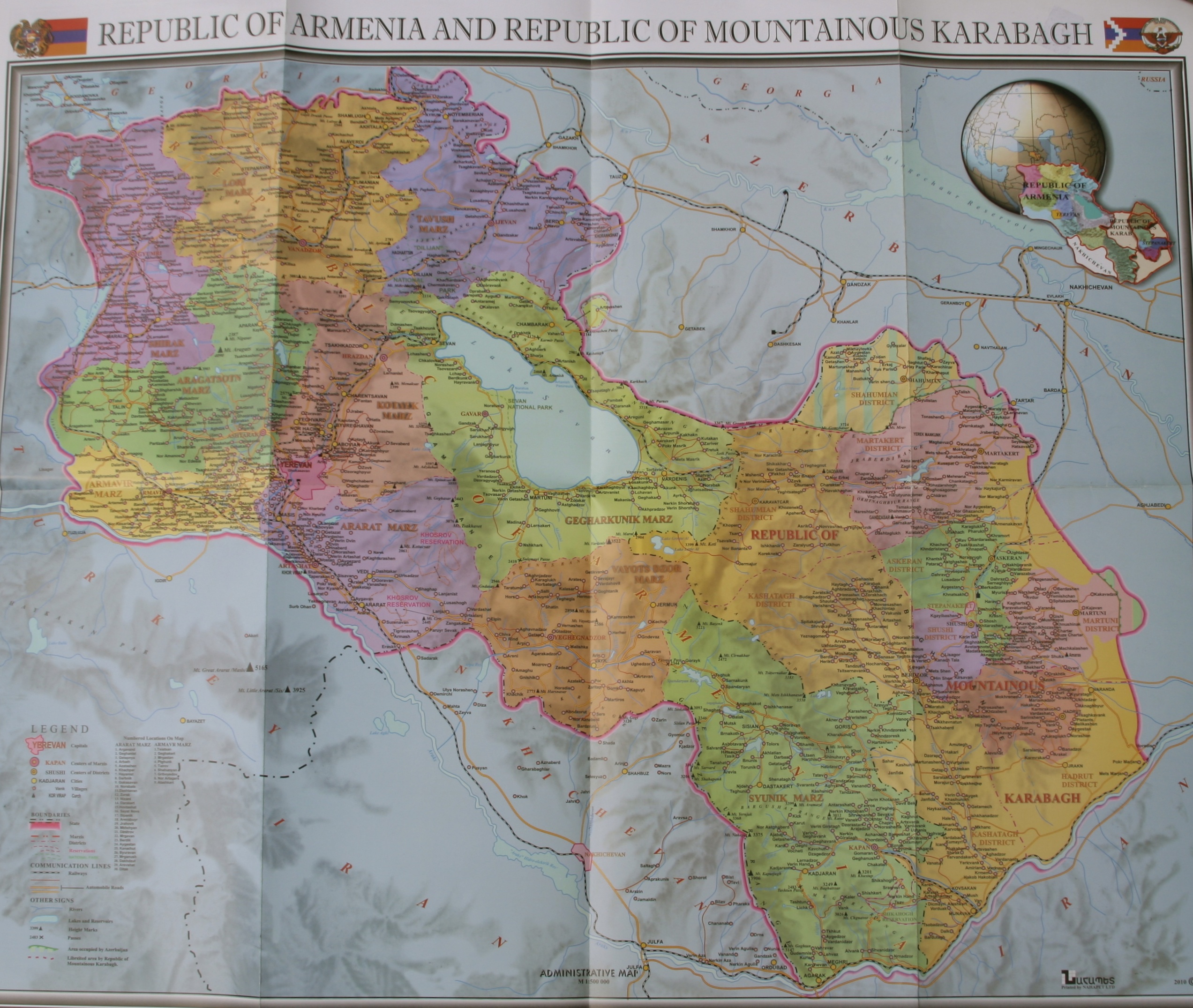
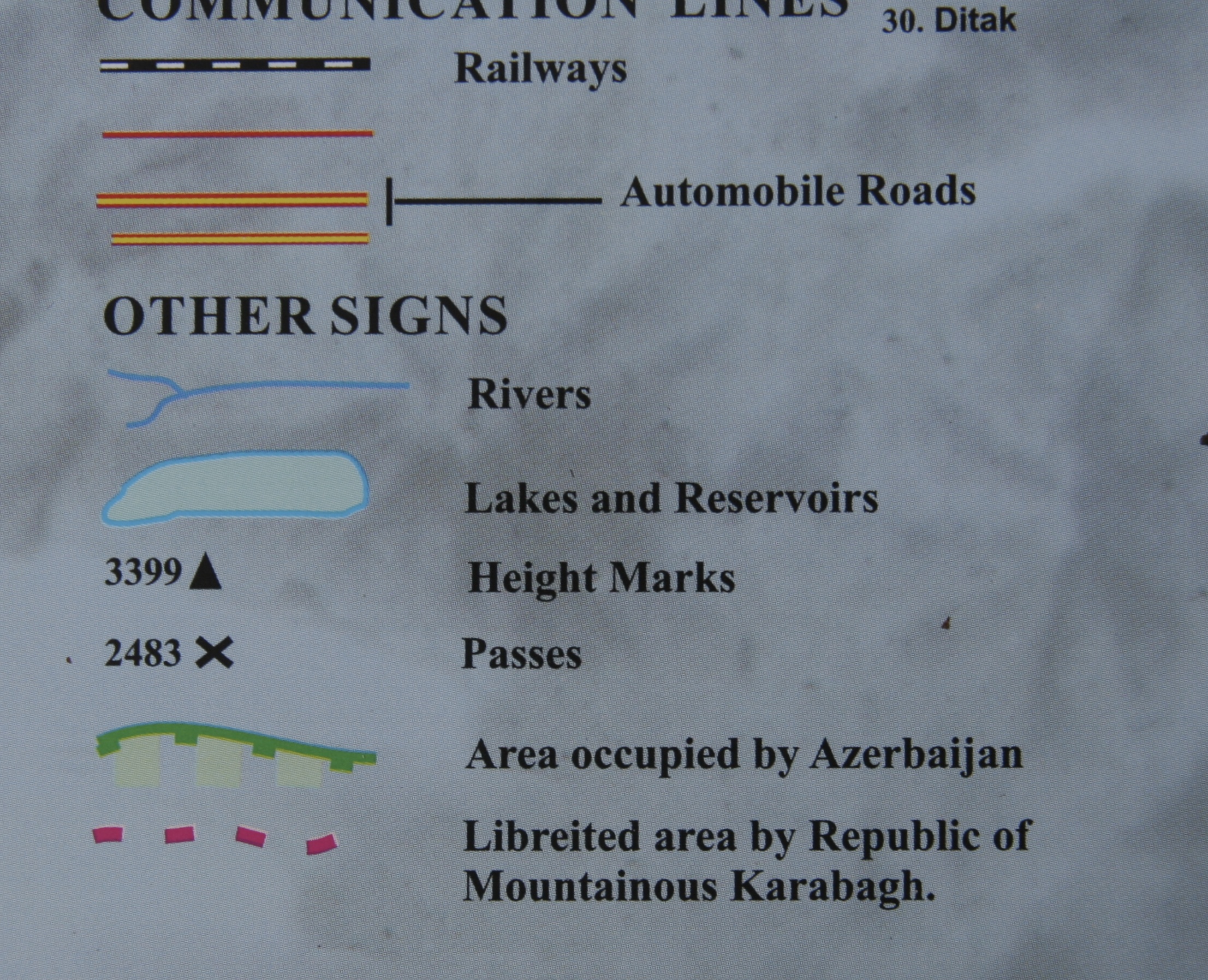
IMG_4645What was going on here? There seemed to be a need, on the part of some, to publicly display a larger territorial body than international norms allowed. We also noted the varying visualizations of Armenia and its relationship to Karabakh throughout Armenia and Karabakh. I began to collect as many maps as I could find to research this fascinating case of a country with a complex relationship to territories seized, not all of which were contested in the 1988-1994 war. From this, the paper began as an exploration of Armenian geopolitical culture and the tensions within it between a conformist cartography and an exhibitionist cartography that displayed Nagorny Karabakh and surrounding territories which were now coded on maps as ‘liberated lands’ (with claimed parts of the NKAO termed ‘area occupied by Azerbaijan’).

IMG_4650POPC is not a social theory journal so we had to scale back the theoretical framework of the paper. We didn’t discuss Mitchell’s ‘world-as-exhibition’, for example, but it is implicit as are certain feminist themes. The editor Dmitry Gorenberg and the staff at the journal were great, providing constructive reviews and striving to make the paper as clear as possible.


The Nagorno Karabakh conflict is an extremely sensitive and painful one. This paper addresses only the perspective of Armenia and tensions within Armenian geopolitical culture. As we write, this has two implications:

First, we do not here “single out” Armenian practices as either unique or subject to specific criticism or censure; our aim is to document current practices and their impact on wider discourses surrounding the Karabakh conflict, not to engage in one-sided criticism of one or other party. Second, this choice implies that investigation of Azerbaijani cartographies and mapping strategies is vital for a rounded view and a necessary subject for further research. This article therefore makes no claims to comprehensiveness vis-à-vis cartographic representations of the Karabakh conflict overall; only one part of this picture is explored here.


IMG_4638Laurence has deep knowledge of this contested territory and has worked for years to create conditions for movement toward peace negotiations and eventually a peace framework agreement. He was great to write with on this and I hope we can do so again if our schedules allow and we are able to examine Azerbaijani perspectives on Karabakh.


Posted in Cartography, Critical Geopolitics, De Facto States, forced displacement, Geography, Nagorno-Karabakh, Nagorno-Karabakh Republic, Nagorny Karabakh, World political map | Tagged , , , | 2 Comments

One Million Bones on the National Mall

ImageThis is what our football pitch on the Mall looked like on Sunday. Taking over the space was a public art installation called One Million Bones. Read about it here. The non-governmental organization behind it is called ‘The Art of Revolution.’ The stated mission of the One Million Bones project “is to raise awareness of and critical funds for survivors of genocides and crises occurring today in Sudan, Burma, the Democratic Republic of the Congo, and in Somalia.” Under ‘Conflicts Today’ on the web site there are 6 not 4 locations presented, with the addition of South Sudan and Syria.

 The geographic delimiting of this project is fascinating. Sudan has long been a focus of genocide awareness campaigns with the Stop Darfur project. Burma is a less known case, and the project is to be lauded for its spotlight on the crimes committed by the country’s deeply entrenched military regime. The case of the Kachin rebels is perhaps the best known of these. The BBC’s Jonathan Head has done some great reporting on this. Last month, the Burmese government and rebel leaders signed a 7 point ‘deal’ that is supposed to lead to a ceasefire, and re-deployment of the military forces on both sides. Previously, the Burmese military were advancing aggressively against the HQ of the rebels who have been fighting for decades. That the DRC is a human rights nightmare has long been known, Africa’s ‘World War’ in Gerard Prunier’s comprehensive study. Somalia and Syria are likewise places of tremendous human suffering and pain.

 Why these places and not others? The exhibition, ironically, was virtually in front of the American Indian Museum yet there was no call out to the ‘dark side’ of the process of state formation of the United States. Why not a location closer to home like Guatemala where there are direct ties to US policy at the time? And is what is happening in these places genocide, or something else? Finally, is ‘genocide awareness’ necessarily a good thing?

These are complex questions. The organizers of the One Million Bones project deserve fulsome praise. They are doing something creative, educational, tactile and visually striking to raise awareness in the United States of human security failures around the world. Care, one of their beneficiaries, does great work in my experience. I’ve a lot of respect for John Prendergast the co-founder of Enough!, another beneficiary, and I’ve just seen that he wrote an op ed in support of Rice and Power’s nominations in Politico last week. Good. It occurred to me that this exhibition’s timing was very positive for the nominations. One of our players, a White House insider, lightly scorned this suggestion with a glint in his eye (but why shouldn’t it benefit ‘the cause’ given years of labor on this issue [my thought, not his]). I haven’t got the chance to chat fully with our two Burmese players yet about their reactions.

Despite all these positives, there is a human rights case against ‘genocide awareness’ campaigns. Too many conflict regions around the world have that term as an integral part of the rhetoric of the conflict. I’ve tried to illustrate this fairly well established argument in the graph below, which concerns how ‘genocide’ as a performative speech act shuts down democratic political debate by inducing a stark moralized Manichean worldview, and subsequent securitization of an imagined core identity under existential threat from a ‘permanent historic enemy.’ The examples are too abundant, unfortunately. Consider the following list of conflict regions today (beyond those listed above) that are shadowed by genocide claims and discourse:

  •  Israel-Palestine
  • Armenia-Azerbaijan
  • Serbia-Bosnia
  • Serbia-Kosovo
  • Georgia-South Ossetia/Abkhazia
  • Rwanda

The cry of ‘genocide’ is powerful political discourse, and unfortunately too often the warrant for harsh policies and war crimes that soon have others shouting the same thing.

 Image


Posted in Current affairs | Tagged , , | Leave a comment

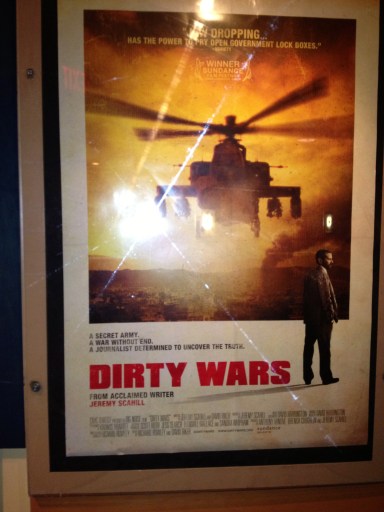
‘Dirty Wars’ Washington premier at E Street cinema

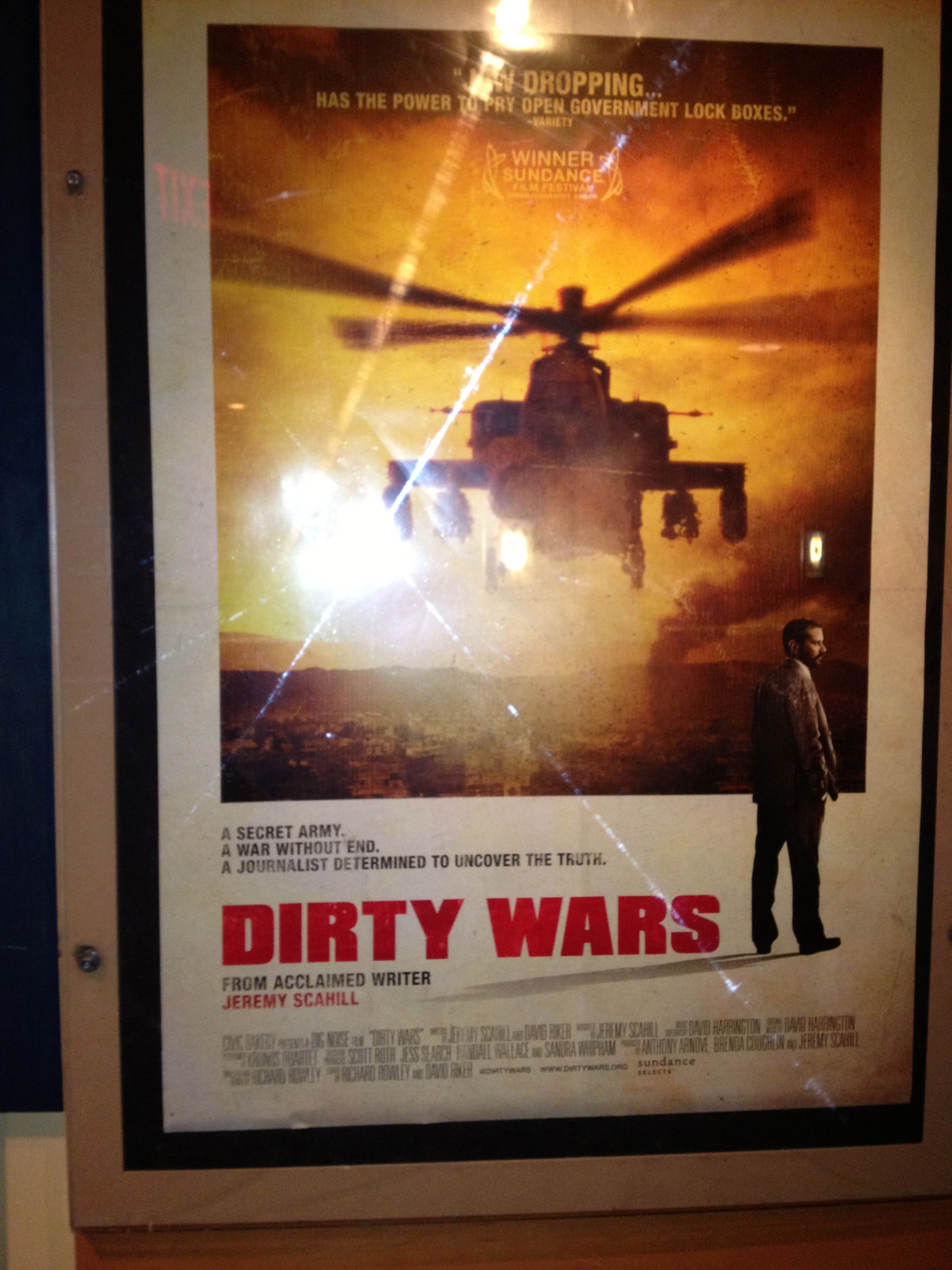
IMG_0965Because the initial showing sold out E Street switched the show to Theatre 4, their largest, and it was almost full by showtime. Despite the topic, the US corn industry had a good night as people were shoveling the stuff into themselves while sipping on the finest high fructose from the plains. After about 15 minutes, however, the munching stopped and the theatre was silent.

The film frames its subject as that which ‘is hiding in plain sight.’ It is organized around Scahill’s work as an investigative journalist for The Nation on national security affairs. His presence unites the disparate parts but he’s no adrenaline junkie. He’s shown working, writing in his notebook, listening, and also being afraid, brooding, tying in his computer, being intense, overwhelmed and burdened by it all. He described himself as ‘gutted’ on All In on Thursday and this comes across to a degree (the classic in/out of war zone disjuncture is depicted as we see him in his neighborhood in Brooklyn). Despite his shades and black garb, there is no showboating masculinity by Scahill in the film (which was refreshing). He appears as earnest and intense, and disturbed by what he’s encountering.

It begins with Afghanistan and Scahill tracking down a night raid that seemingly went awry. He ventures on the dangerous journey beyond Kabul and meets the family of the victims who relate their story. Through some chance video and photographs (and how omnipresent visual recording devices are changing what we know and believe is a theme of the film) he is able to tie the raid back to JSOC (he interviews another reporter who broke the story first, a somewhat unusual move in what must be a highly competitive profession). He then provides some background on this group — essentially a presidential paramilitary unit — and there are scenes of Washington DC (66, Tysons Corner, etc) before he focuses on his core subject which is the US terrorist assassination program, in bureaucratize ‘High Value Targeting’. He makes his first trip to Yemen to chase down a report on a drone strike in southern Yemen that murdered many poor tribesmen. We see the familiar marking on the drone (General Dynamics, Rosemount) and meet the Yemeni journalist Abdulelah Haider Shaye who was imprisoned for writing about it. The film suggests that Obama personally requested that Ali Abdullah Saleh keep him in prison (he’s apparently STILL in prison in Yemen, according to Scahill).

IMG_0966The failed Christmas day bombing leads to the emergence of Anwar Al Awlaki, an American citizen, as a new terrorist mastermind that is, in effect, on the ‘kill list.’ He tries to find him in Yemen and fails but does manage to talk to his father. Its a fascinating story, one told in Chapter 2 of the book. Thereafter the film moves back to Washington, the killing of OBL, and Scahill’s trip to Somalia. This receives scant coverage (he indicated they had a 4 four version of the film before Sundance which provided all the background and further details) but enough to convey the message that the US is allied to some unsavory warlords in Mogadishu like Yusuf Mohammed Siad (Indha Adde). He then learns of the drone strikes that kill Al Awlaki and then, stunningly, his 16 year old son. This leads to a return to Yemen and a heartbreaking tale of loss from a grandfather and grandmother.

Throughout the film the faces of children feature prominently. Its difficult, especially if you’ve young girls like I have, to watch sometimes. Pregnant women getting murdered are also cited at the outset and again on another occasion. This was, as Scahill stated afterwards, a conscious choice of the filmmakers, to put ‘a human face’ on what the US’s ‘war on terror’ looks like on ground and in the eyes of children far away from this country. The cinematography uses mainline techno-spy thriller film devices to site and situate, black and white still shots with detailing information techno-type scrolled. Many of its landscape shots are beautiful. It is, in short, a very polished film, not polemical, just disturbing and questioning.

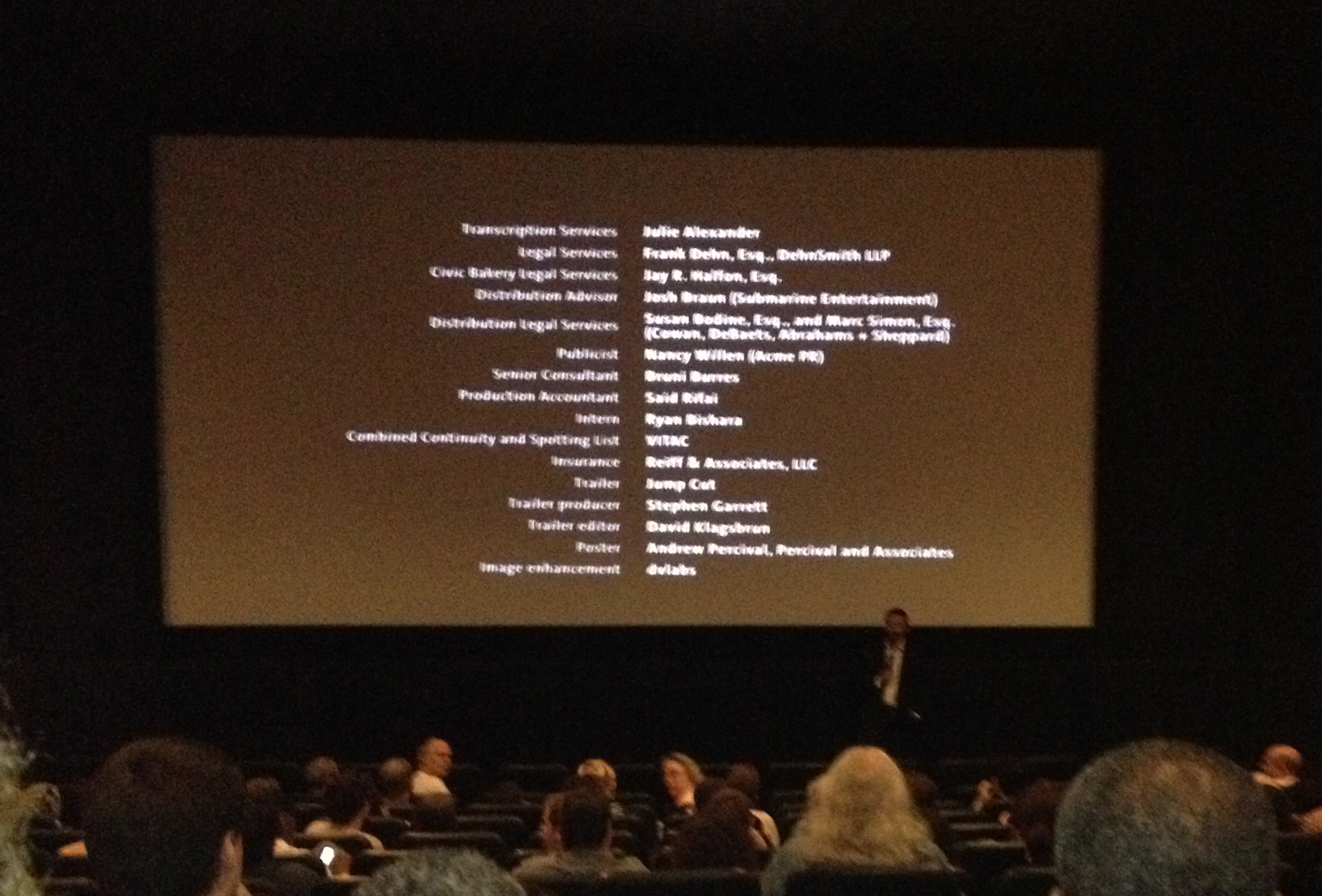
IMG_0967After the credits rolled, the film got a round of applause and then a more sustained one followed as Scahill came out and answered questions. The first comment, a sincerely moved audience member, cited a comparison to Hitler (which was not a good start). Another man from Nigeria wanted to give him information on what was happening in his country. I recorded some of 20 minutes of the 40 minute exchange, including a question I posed about his perspective on the continuities between the Bush administration and the Obama administration. For me, this is a key question as evocations of a shared ‘mentality’ or ‘the system’ are inadequate. In addressing it, he cited something I’ve heard him say before, namely that liberals have ‘checked in their conscience’ with Obama. He cited the case of Obama still using rendition through sub-contracting it to various groups in Africa, mentioning a flight from Kenya to Somalia and an underground prison. I believe its in the book but I haven’t got that far yet.

But this leaves the larger question unanswered. How did an anti-dumb war, civil liberties championing constitutional law professor get so enveloped that he doubled down on certain modalities of the war on terror established by Bush? Was this a political anxiety (or ‘seize the flag from the right’ project) that Democrats should always appear ‘tough’ as well as ‘smart’ on national security? Was this a desire by this once outsider and subsequent product of the establishment to still demonstrate, to perpetually demonstrate to the permanent national security state, that he really was one of them, that he believed the same things? Was this a product of the seduction of the Washington power game, of the gravitational pull of the enormous mightier-than-one-president ‘top secret America’ post-9/11 state? Or was this the inevitable ‘growth’ of a leader as they transition from being a candidate assembling a winning coalition to a president charged with the weight of government? Part of winning is seducing some groups (civil liberties democrats) while marginalizing others (there’s a scene where a Pentagon reporter cites what is presumably one of his articles in The Nation and this prompt elicits a ‘conspiracy theory’ tag from the spokesperson)? I believe historians of his presidency will be debating these questions. Geographers, hopefully, will have rich books out on geographies of the war on terror out in the next few years (Derek Gregory’s Everywhere War is much anticipated).

Scahill’s world is that of the investigative reporter. He’s focused on the facts, details and lines of connection that reveal abuse of power and extra-constitutional excess. Don’t expect to have Agamben cited. That is the power and value of his work. It gets under the skin of the conventional wisdom and general consensus on the war on terror. It disturbs. With the journalistic revelations of the last week (and there’s a lot more coming from what Scahill indicated; he also mentioned how journalists are now changing their digital behavior in big ways), the whole  everywhere endless terror security surveillance state is cracking open before our eyes. Its not hiding in plain sight anymore.

Posted in Current affairs, Dirty Wars, drones, Jeremy Scahill, Obama, Somalia, war on terror, Washington D.C., Yemen | 3 Comments

The Bordering of South Ossetia

Having grown up in a contested border region during the Northern Ireland Troubles, I’m familiar with the trepidation and tragedy that often accompanies projects to harden borders, to militarize them in the name of state security. As our recent article outlines, South Ossetia like Abkhazia has sought to more definitely stake out for itself ‘state sovereign territory.’ This has produced a wave of  material practices of bordering since 2008 when Russia declared it was recognizing these breakaway territories as independent states. More so that in Abkhazia, (which relies on the Inguri for part of its border), this process has been deeply controversial in South Ossetia where borders were more fluid and penetrable before 2008, and where the SOAO (South Ossetian Autonomous Oblast) had little to no visible footprint on the landscape of Soviet Georgia.

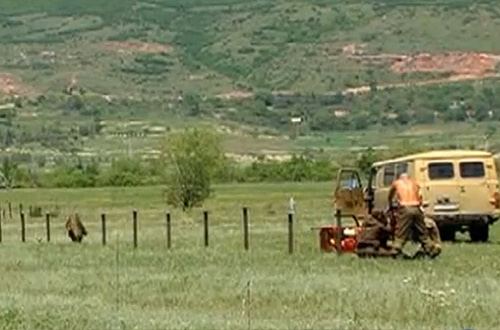
fencing-SOssetiaAdminBorderFrom the CIVIL.GE WEBSITE: A screengrab from TV footage showing Russian troops installing fencing poles in the vicinity of the village of Ditsi close to the South Ossetian administrative boundary line on May 27, 2013.

The consequences of these actions are predictably dire for local communities living along what has now become an ‘international border’ to Russia and the South Ossetian Republic, and an ‘administrative boundary line’ to the Georgian government. My friend Tabib Huseynov did a terrific report for Safer World on the population in this area (available here). So also did Care International earlier on IDPs in the region: “Community Perceptions and Conflict Prevention Needs in the Georgian South Ossetian Boundary Area
and among IDPs in Georgia” (which doesn’t seem to be readily available on the net).

Now, the Russian and South Ossetian forces are seeking to physically demarcate the border through barbed wire and border posts in the lands near the villages of Ditsi and Dvani. For video on the reactions of local villagers see this RFERL piece.

The Civil Georgia website has a series of important stories on the process of bordering.

Predictably, this border demarcation has been aggressive, deeply contested, and a political football within Georgia.

Today, one can drive across the border between the Republic of Ireland and Northern Ireland without stopping or difficulties. In the weeds on the side of the road, the eagle eyed can spy amidst the overgrown grass and weeds the ruins of previous customs and army border installations. In this fact, something I’m happy to have seen in my lifetime, there is hope for a better future for Georgia and South Ossetia. It will take time but maybe not as long as most pessimistic realists (of which I’m one) think.

Posted in Current affairs | Leave a comment

Inside South Ossetia article published

ImageThe article “Inside South Ossetia: a survey of attitudes in a de facto state” has just been published by Post-Soviet Affairs (now owned by Taylor & Francis). This article is based on a research field trip conducted in 2010 and the commissioning of a public opinion survey thereafter. The article discusses the circumstances and difficulties involved in researching this, and other de facto states. Below is the Abstract.

South Ossetia was the main site of the August 2008 war between Georgian military forces, local South Ossetian forces, and the Russian military. Soon thereafter, the Russian Federation recognized the territory as a state, the South Ossetian Republic. This article reviews the contending scripts used to understand South Ossetia and the basis of its claim to be a state. Presenting the results of a public opinion survey of Ossetians living in the territory in late 2010, we discuss the trust in local institutions and leadership, ethnic Ossetian attitudes toward other groups, return and property, as well as relations with Russia and Georgia.

Keywords: South Ossetia; Russia; Georgia; post-conflict; unrecognized de facto state

Posted in August War, Caucasus conflict, Current affairs, De Facto States, ethnic cleansing, Five Day War, forced displacement, Geography, Geopolitics, George Bush, Georgia, nationalism, Political Geography, Saakashvili, South Ossetia, World political map | Tagged , | Leave a comment

The Endless Everywhere War? America’s War of Terror, 1.0, 2.0, 3.0….

DirtyWarsAsked at a Senate hearing yesterday how long the war on terrorism will last, Michael Sheehan, the assistant secretary of defense for special operations and low-intensity conflict, answered: “At least 10 to 20 years...”  A spokeswoman later clarified that Sheehan meant the conflict is likely to last 10 to 20 more years from today. As Spencer Ackerman wrote: “Welcome to America’s Thirty Year War.”

Ever since the Bush administration’s militarized response to 9/11 there has been debate within the US national security community about the implications of a ‘boundless war’ and potentially ‘endless’ war. A whole military-security-defense complex congealed around this ‘war on terror’ while smaller states maneuvered to position themselves as allies of the US and its new strategic agenda. The Bush administration gave us the Global War on Terror (GWOT), the original, 1.0 War on Terror. Its modalities featured high profile regime change operations, US ‘boots on the ground’ and counter-insurgency as its responsive doctrine to encounters with the blow-back from imperial governance and strategic blunders.

Even before its end, the Bush administration had ditched the GWOT and began transitioning to a War on Terror, 2.0. This transition took some time though and bridged the second Bush and first Obama administration. Here the modalities were different: lower profile special operations, drone strikes in Af-Pak and Yemen, and a counter-terrorism doctrine (after Obama choose, for political purposes, to briefly surge the counter-insurgency effort in Afghanistan).

What appears to be enduring is (i) the perception that the war on terror is not going to end soon, that the original 2001 Authorization to Use Military Force against al-Qaida is still relevant and needs to remain because Al Qaeda and “associated forces” are proliferating and (ii) that the battlefield is global and, therefore, that the US military requires global military capacities, and technological systems, to respond to this threat. The ‘endless everywhere’ principles, thus, seem to be intact, and a recipe for a permanent war on terror complex (a deep state, a top secret America) within the US.

The questions Ian Lustik raised years ago in his excellent Trapped in the War on Terror are more relevant than ever. To the burgeoning literature on critique of the assumptions and practices characterizing America’s war on terror comes Jeremy Scahill’s latest book which I have sitting before me on my desk, Dirty Wars: The World is a Battlefield. There’s also a documentary of the same name about to be released. I’ll post on these as a find time to work through them. I don’t expect it will be pleasant reading.

How this plays politically is interesting. At yesterday’s hearing, it was Republicans and Independents who appeared most critical. Angus King (I-Maine) criticized the use of the phrase “associated forces.” “You guys have invented this term, associated forces, that’s nowhere in this document [the original 2001 authorization],” King said. “It’s the justification for everything, and it renders the war powers of Congress null and void.” Sen. John McCain (R-Ariz.), expressed incredulity over the Pentagon’s broad interpretation of the AUMF. “None of us” who voted for the law in 2001 “could have envisioned [granting] authority [to strike] in Yemen and Somalia,” McCain said. How interesting that Senator McCain is saying such things!

Posted in CIA, Current affairs, drones, Geography, Geopolitics, George Bush, war on terror, Washington D.C., Yemen | Tagged , | Leave a comment