Interview with News.Az

To mark the anniversary of the August 2008 war, the English language Azerbaijani web site News.Az conducted a series of interviews with various specialists on the Caucasus. There are interesting interviews with Lincoln Mitchell and Hans Gotbrod. My interview sought to draw attention to Ireland’s role as chair of OSCE this year and to how the Northern Ireland peace settlement offers some hope for addressing contested territorial sovereignty disputes.

Posted in Caucasus conflict, Current affairs, Georgia, Nagorno-Karabakh, South Ossetia | Tagged , , | Leave a comment

More on the Geographies of Violent Death

The events in Aurora this weekend re-awakened some horrible memories for those associated with Virginia Tech. In discussions on television and elsewhere, ‘Virginia Tech’ has unfortunately joined the litany of names of horrific acts of mass violence perpetrated by deranged individuals, the very name recalling the horror (and momentarily overriding all the other meanings it has in the public mind): “Columbine, Virginia Tech…..” (Observing the non-debate debate, the politicizing by decrying politicizing, the doubling down on denial — guns for everyone = safety not danger — has been interesting in that, more and more, these strategies, and ‘rights’ discourse, are being called out and deconstructed in public debate)

On the television we also see nightly scenes of horrific violent repression by the Syrian government of its own citizens. Less prominently covered but nevertheless also on BBC television at least is the M23 insurrection in eastern Congo that threatens to tear down the positive image Rwandan President Paul Kagame has long enjoyed in the West (he is listed on the Advisory Council for the 2011 World Development Report: Conflict, Security and Development, for example, along with some outstanding women like Madeleine Albright, Louise Arbour, Ellen Johnson Sirleaf and other). And then there is Iraq where co-ordinated car bombs across the country on 23 July killed 116 people.

Both Aurora and the state-failing violence are spectacular kinetic forms of violence that attract considerable media interest. Less ‘big bang’ spectacular but nevertheless just as horrific is the violence Mexico has experienced over the last four years of the narco kingpin campaign of the outgoing government of Felipe Calderon, Indeed it is very spectacular in its own grizzly way. In a long chilling article New Yorker journalist William Finnegan recounts the elusive nature of the killings and the thoroughly corrupting nature of the drug production and transit industry. The events described therein are daily traumas inflected on a body politics that is long suffering, most especially poor and middle income residents of Mexico. With so much darkness close at hand and within, it is no wonder people seek escapism in stories of dark avengers. Tonight I’ll do the same.

Posted in Africa, Congo, Current affairs, Geography, Washington D.C. | Leave a comment

Powerless in DC

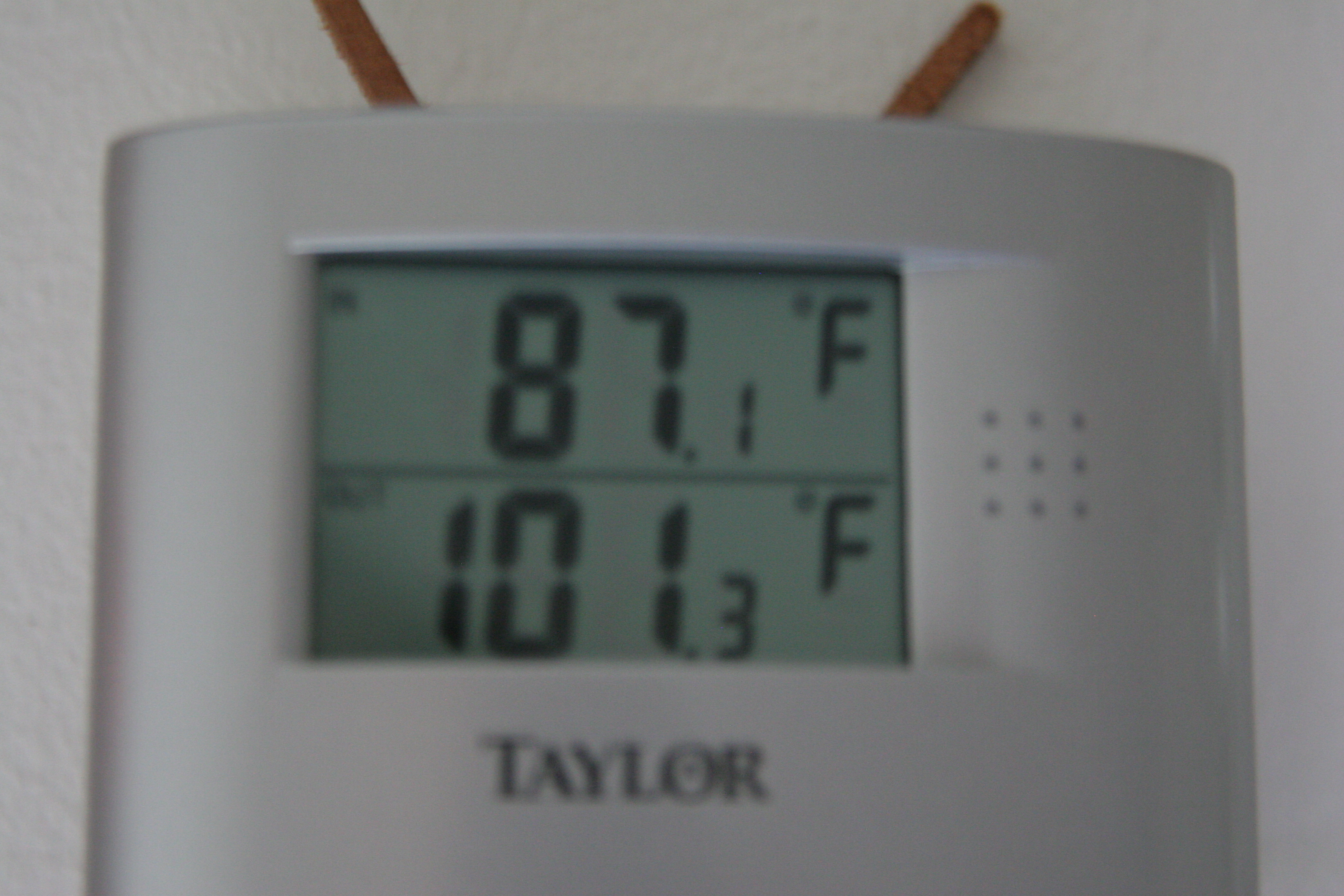
Washington DC has been through an eventful few weeks, and the action is not all at the White House, Supreme Court and in Congress. A ‘microburst’ weather storm left many residents without power on the 21st of June (including our home) and, as many news viewers know, a derecho rolled across the eastern seaboard late on the 29th, leaving millions without power and thousands with extensive damage to their property. Since then Washington DC has been under an unforgiving sun, with ten straight 95 degree days, possibly topped today by an all time record high temperature (the previous high for this day was only set two years ago). We lost power not right away but after I had filled the fridge and invited a group of friends over to watch the Euro2012 final. We lost power at half-time and got it back 30 hours later after most things had spoiled in the fridge.

The frequency with which Washington DC looses power has always struck me as revealing of the limits of the US’s sense of modernity. It is now a very old modernity and the evidence that it is coping badly with the now predictable technoscientific challenges of global risk society is incontrovertible. The US desperately needs infrastructural investment and to refit itself for the new climate regime of extreme weather. (Even a local resident conservative, albeit a Canadian, agrees). US workers and firms could use the work. But are the dots being connected in Congress? No, instead the preferred stimulus this fall is an avalanche of special interest money into the political system to try to buy the presidency and the new Congress. Ordinary Americans are hot and bothered these days, but those special interest dollars will work hard to convince them its the other political guy’s fault. Time for some winds of change in the ‘capital of the free world,’ or just some darn wind to cool us off.

Posted in Current affairs, Obama, Presidency, Washington D.C. | Tagged , , , , | Leave a comment

Geographies of Massacres

A government under severe pressure from rebels unleashes violence that results in a massacre of families, women and children especially. This is the horror scene we’ve seen for the last few weeks in international affairs. But its is hardly confined to Syria. Two days ago in Logar province in Afghanistan, a NATO airstrike killed an estimated 18 civilians. It was hardly the first such incident. Death from the sky by a NATO missile is different from close quarter killing by a government sponsored militia, but that is little consolation to the dead. The same day, a Taliban suicide bomber murdered at least twenty street traders and civilians in Kandahar.

The massacre in Houla was also truly sickening, and immediately reminded me of the Racak massacre in Kosovo that was an important event in triggering the eventual NATO war against Serbia in 1999. It is interesting how the notion of a ‘tipping point’ has been evoked by media commentators (the latest being in the Financial Times) in its wake. The horror spectacles of massacres have always been used to mobilize and polarize. Think back to the woodcuts of religious massacres in the seventeenth century, and graphic horror stories about pregnant women and babies ripped from bellies. My old college friend from Ireland Vincent Carey curated an excellent exhibition at the Folger Shakespeare Library on the theme of Tolerance and Intolerance in the sixteenth and seventeenth centuries a number of years ago which touched on the historic formula for the presentation of massacres.

The point of the FT article is that images of this massacre — and now we hear there is another — are deepening the now evidently bloody struggle in Syria between a predatory state, and its apparatus of repression, and multiple localized structures of resistance and counter-force violence. The term ‘civil war’ is used more frequently but it appears to me to be imprecise. This is a regime versus opposition struggle that unfortunately, as a result of the widespread use of violence, appears to have become a localized ethnic security dilemma. Were men from neighboring Alawite villages involved in the attack on Houla?

Witnesses say the Shabiha gathered near the water plant and the military depot nearby, before moving to the villages of Foulah and Qabou, two of four villages of the Allawite sect that surround the exclusively Sunni town of Houla.

Answering this question will tell us how ethnicized this has become and what ‘civil war’ means in this context. BBC Reporter Paul Wood argued last week that the killing is family targeted revenge killing and not all out sectarian killing, but conceded that it is slipping towards the latter.

Houla appears unlikely to be a tipping point in the diplomacy for now. Russia sees Syria as a client regime and sells it a lot of weaponry. It is not unfamiliar with the use of bloody close quarter methods to suppress revolts. The Obama administration appears to have concluded that it cannot afford to go ‘unilateral’ on this sickening affair, and is waiting, or going the extra diplomatic mile to see if it can persuade the Russians to come around, and gather in an ad hoc crisis-specific Contact Group which could support some sort of ‘humanitarian’ intervention (an ‘humanitarian zone’ supported by coercive power, with Turkish troops on the ground and NATO airplanes in the sky?). Also this is an election year and there are only downside risks in this, though I suspect folks inside the administration like Susan Rice, Samantha Power, Hillary Clinton and probably Obama himself find this tragic in the extreme.

But perhaps I am wrong. A fascinating article on Obama’s drone assassination program in the New York Times provides real insight into how ‘just war’ doctrine appears to be justifying Obama’s policy on this. So also is a policy of ‘no innocents next to terrorists’ that justifies the killing of everyone in the radius of a known terrorist target.

For a ground level view see also the excellent Frontline documentary on Al Qaeda in Yemen.

What do we call this disposition and attitude? ‘Realism,’ hardheadedness’ or (always a safe bet with Obama) ‘pragmatism’ ? ‘Responsibility to protect’ meets responsibility to ‘take the shot’? Grim, grim stuff.

Posted in Current affairs, drones, Syria, Yemen | Tagged , | Leave a comment

Orientalism and War

A new edited volume, Orientalism and War, edited by Tarak Barkawi and Keith Stanski, will appear soon published by Columbia/Hurst. Asked to blurb it, I took some time to read the chapters, some of which I found to be intellectually rich and effective in conveying the racist underpinnings of many wars. I was somewhat skeptical of the framing of the project because I have long found Ahmed’s critique of Said’s notion of Orientalism pretty persuasive. The concept partakes of that which it seeks to critique, inciting totalizing and moralized binaries at the same time as it tries to problematize them (imperial/anti-imperial being a particularly a seductive one). Some of the essays, those that skip blithely (as Said does) over hundreds of years of history and different contexts to make similar meta-points, succumb somewhat to this. Others are intellectually stimulating and well written, developing important points on voice, vision and gendered violence. Outing ‘Orientialism’ as a project can led to writing that is polemical and morally self-righteous, a condition avoided here for the most part though one could argue that there is a degree of self-affirming group think at work. To the editor’s credit, they enlisted Patrick Porter whose book Military Orientalism was published by Hirst in 2011 to write the Afterword (I have not read this work; here’s a H Net review). This Afterword is provocative in challenging some implicit assumptions in the essays that have gone before, most especially in a sometimes too easy homogenizing of cultures of knowing/positioning ‘the East.’ What is ‘imperial’ and not is also more complex than it appears. Its a good ending for the book, a call for more reflexivity and modesty in critique.

By pure chance, I managed to see a fantastic documentary that was very apropos of the subject, called Killer Subs in Pearl Harbor. It traces the search for a fifth Japanese midget submarine (unknown to this point and technological marvels, from the East!) that was involved in the attack in December 1941, and reveals a remarkable level of co-operation between US and Japanese academics. There is also a touching sequence in which a veteran of the Japanese imperial army dives with the sub search and upon its discovery shows modern day photos of relatives to the two dead Japanese mariners entombed within it. The degree to which the US Navy cooperates with the subsequent honoring of their memory is also remarkable, bearing in mind that they were part of a mission that killed thousands of Americans and launched the US into World War II. Studies of war and orientalism, in my opinion, are best approached through precise cases for that allows appreciation of the conjunctural and moral dilemmas that attend the subject.

Posted in Current affairs | Tagged , , , | Leave a comment

Mladic Goes on Trial

In early September 2004 I flew to the Hague for an academic conference from Istanbul (where I remember watching the horror at Beslan unfold on BBC TV). I took a day off from the conference to visit the ICTY court house. I ended up spending the day watching the trial of Slododan Milosevic with about five other people in the public gallery which was behind a plexiglass partition from the court room. It felt like one was watching theatre in a fish bowl. A Greek American, James Jatras, was testifying on Milosevic’s behalf, a gentleman who once worked for a group called the US Senate Republican Policy Committee on Capitol Hill. He also worked as an aide to former Senator Larry Craig (R-ID). What he articulated was a ‘clash of civilizations’ argument, with a clear Orthodoxy versus Islam dimension.

I am recalling this visit today because General Ratko Mladic has just gone on trial at the same building I visited. Michael Dobbs is blogging on the trial and has recorded a series of video interviews with survivors outside this building. It is disquieting viewing. One, on the one hand, is happy for these victims that they have had a ‘day in court’ with the person with command responsibility for the crimes they experienced and suffered. On the other hand, their horror is re-awakened and overwhelms them and us. No human being should have had to suffer like their much younger selves (minus 20 years) did. Violence can occur in an instant yet its impact, for those that survive its trauma, lasts a lifetime.

I hope, for all concerned, that this trial proceeds in a manner that is rigorous in establishing facts and controlled in its limitation of infantile behavior by Mladic. How sadly ironic it is that a few of the children his forces once brutalized get to view him as an old man behaving in a child-like manner. For a report on the first day see Julian Borger’s account in The Guardian.

Posted in Current affairs | Leave a comment

Nationalism in New York City

With fragile economic conditions across the globe, it does seem that strong nationalist rhetoric and fear about globalization, immigration and loose borders is with us more than ever (the Dutch government collapse, Le Pen’s showing in France, the worrying situation in Macedonia). The 2012 Association for the Study of Nationalities conference at Columbia University in New York this last weekend provides evidence that nationalism and nationalities studies is also growing exponentially. This year’s conference featured a remarkable 27 panels on the Balkans, and more sessions than ever before. In fact, there were 70% more presentations at this conference than five years ago, an amazing level of growth. I like this conference for a series of reasons. Participants are required to prepare written papers beforehand. These are collected and distributed to everyone who cares to buy the conference CD for $10 (previously, individual papers were for sale). All sessions have chairs and discussants and the rules of presentation and discussion are clear. The sessions are relatively close to each other, on different floors of the same building. The participants come from all over the world and are deep area experts. Region and topic not academic discipline is to the fore. There are lots of book panels also on the latest new publications. There is a significant presentation of recent documentary films on themes of nationalism and group conflict questions. Finally, the setting is the International Studies building at Columbia which offers amazing views of the city. Its expensive to stay in New York but this conference is simply unmissable for area specialists.

This year I was involved in presenting two papers, with co-authors, one with my graduate research assistant on Karadzic and the second with Laurence Broers of SOAS on Karabakh. I was also a discussant on a de facto state session, one of about 3 on these regions of the world political map. I attended some excellent sessions on the Armenian genocide as well as catching the latest Conciliation Resources film on the Caucasus: Memories without Borders (highly recommended). The First Annual ASN Documentary Audience Award went to the French film Qui a tué Natacha? (Who Killed Natasha?), from director Mylène Sauloy, a wrenching investigation on the murder of human rights activist Natasha Estemirova in Chechnya. A runner-up, also the most attended film of the Convention, was My Perestroika, from US director Robin Hessman.

Bosnia Remade was shortlisted for the book prize but did not win the top award, which went to Roger Petersen’s latest book. The most attended session was Timothy Snyder discussing Thinking the Twentieth Century, his ‘spoken book’ with Tony Judt. This was really interesting and intellectually inspiring (as is the book).  All told this is a great conference, for which the organizers deserve enormous credit.

Posted in nationalism | Tagged , , , | Leave a comment

The Bosnian War Twenty Years Ago

This week marks the twentieth anniversary of the Bosnian War. Its a time for remembrance, of the circumstances that created it, the people who planned it, the perpetrators and the victims. Most of the focus will be on Sarajevo later this week and next week where some of the journalists who covered the war are having a re-union at the Holiday Inn. But we’d do well to remember the town where ethnic cleansing in Bosnia began, 1-4 April 1992, the northeastern town of Bijeljina (Ron Haviv’s famous photo of Arkan’s forces in Bijeljina is left).

I’ve written an opinion piece on the twentieth anniversary which is available at the Oxford University Press blog.

I’ve also created some material related to Bijeljina on the Bosnia Remade website.

After destroying Bijeljina’s multiethnic life, Arkan and the JNA moved south and attacked Zvornik, terrorizing it and seizing it on the 10 April 1992.

SDS activists set up street barricades around Sarajevo on 5 April 1992.

Posted in Bosnian war, ethnic cleansing, Geography, Geopolitics, Radovan Karadzic, war crimes | Tagged , , , | Leave a comment

Companion to Critical Geopolitics

About three years ago Klaus Dodds, Alan Ingram and Merje Kuus convinced Ashgate to establish a book series with the title Critical Geopolitics. Since then the series has seen the publication of four volumes: Europe in the World, Reconstructing ConflictMapping the End Times, and Spaces of Security and Insecurity. Those familiar with Ashgate’s publishing niche will not be surprised that these books are mostly in hardback and extremely expensive (over $100). The exception is Mapping the End Times edited by Jason Dittmer, University College London, and Tristan Sturm, an Agnew student at UCLA, which is available in paperback for $40.

A fifth volume is currently in production edited by Klaus Dodds, Joanne Sharp and Merje Kuus officially called The Ashgate Research Companion to Critical Geopolitics. The lineup of authors, and subject material, is impressive. I was unaware of the volume until January when Joanne asked me to write a prologue. Yesterday I finished the short piece, which I will not reproduce here for copyright reasons. Instead, I will post the table of contents of the volume, with an embed link to the video I discuss in the prologue (around minute 2 is the passage I begin with). I expect Political Geographers will be keen to get their hands on the volume. But will Ashgate make it affordable?

Table of Contents

Prologue: Arguing About Geopolitics, Gerard Toal (Gearóid Ó Tuathail)

Introduction: Geopolitics and its Discontents, Klaus Dodds, Merje Kuus, and Joanne Sharp

 I: Foundations

Introduction: Geopolitical Foundations, Klaus Dodds

The Origins of Critical Geopolitics, John Agnew

Realism and Geopolitics, Simon Dalby

Texts, Discourse, Affect and Things, Martin Muller

Visual culture, Rachel Hughes

Heteronormativity, Linda Peake

Sovereignty, Fiona McConnell

Radical geopolitics, Julian Mercille

Neo-Liberalism, Simon Springer

Geopolitical Traditions, James Sidaway

 II: Sites

Introduction: Geopolitical Sites, Joanne Sharp

Borders, Anssi Paasi

State, Sami Moisio

Militarisation, Matt Farish

Media, Paul Adams

Resources, Phillippe Le Billon

Environment, Shannon O’Lear

Global South, Chi-Yuan Woon

Intimacy and the Everyday, Deborah Cowen and Brett Story

Spaces of Terror, Ulrich Oslender

III. Agents

Introduction: Human Agency in Geopolitics, Merje Kuus

Non-State Actors, Alex Jeffrey

International Organizations, Veit Bachmann

Indigenous Groups, Chris Gibson

Journalists, Alasdair Pinkerton

Artists, Alan Ingram

Evangelicals, Jason Dittmer

Intellectuals of Statecraft, Mathew Coleman

Women, Jennifer Fluri

Activists, Kye Askins

Posted in Current affairs | Tagged , | Leave a comment

Researching the Founding Fathers: Karadzic and Mladic

Last Friday I attended a conference entitled fY + 20 (the former Yugoslavia plus 20 years) organized by my co-author Dr Carl Dahlman at the Miami University in Oxford Ohio (with the help of others and sponsoring institutions). It was a small but high quality conference with some excellent presentations and discussions by, among others, Robert Donia, John Agnew and Robert Hayden. I presented a paper on Dodik and my research assistant (RA) presented our joint project on Radovan Karadzic and the 1990 election campaign which we will also present at the forthcoming Association for the Study of Nationalities conference in April in New York. It was great to learn that Dr Donia, author of the excellent Sarajevo: A Biography, is finishing a biography on this “founding father” of Republika Srpska.

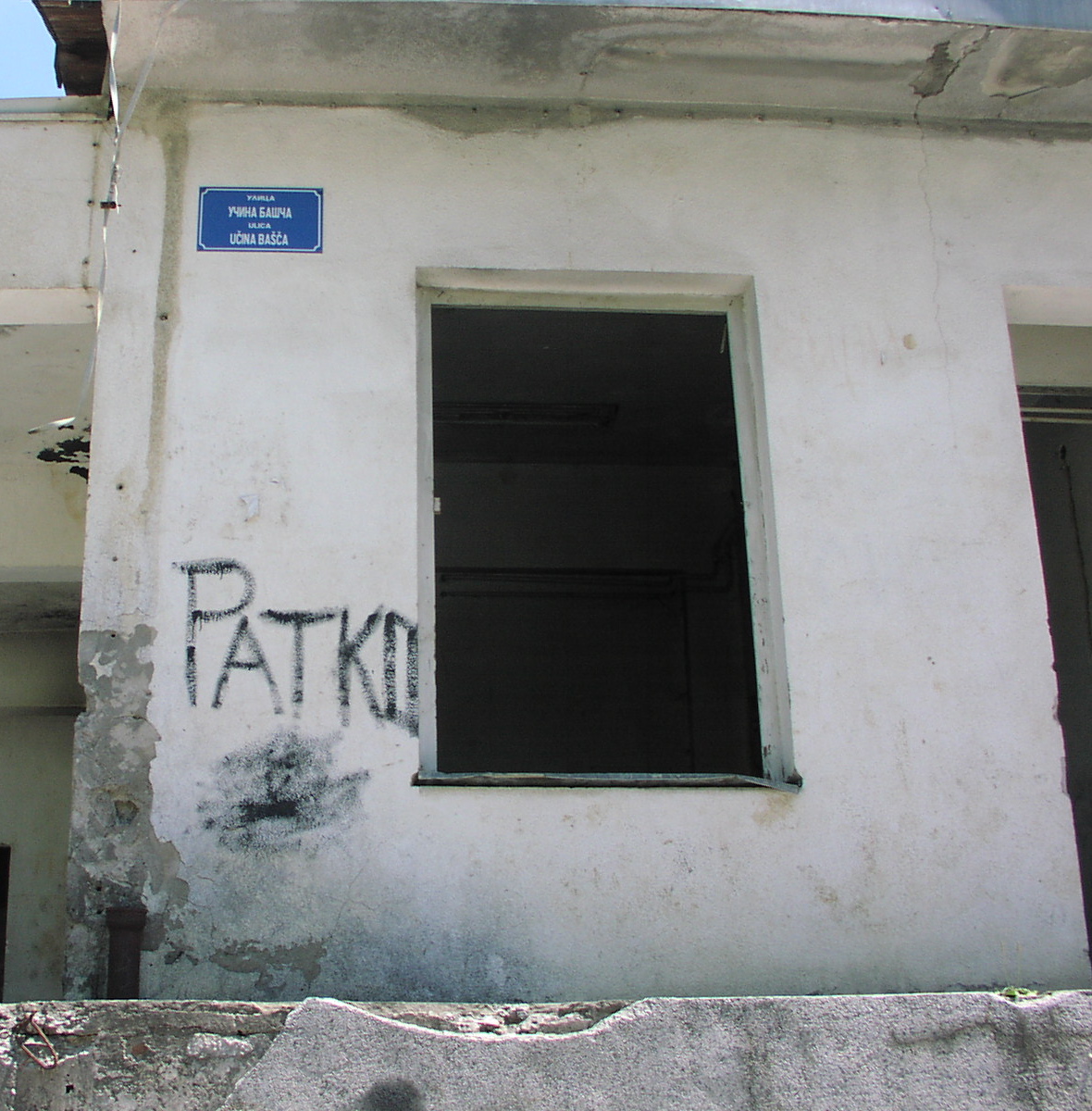
The other infamous founding father, of course, is Radko Mladic (insert picture is one I took of graffiti on destroyed building in Srebrenica, summer 2005). Today, Dr John O’Loughlin, my RA and I had an informal presentation at the US Holocaust Museum where we met with Michael Dobbs and a number of others. He is working on a research project on Mladic and has written important background articles which is available on the Foreign Policy web site. He and his RA Sarah Collman are also gathering materials The Mladic Files which are available on the Holocaust Museum website.

Tis great to see that the hard work of research on these two figures now before the ICTY is now occurring. There is still a lot to be learnt about both figures and about the crucial turning points in Bosnia’s decent into bloody civil war.

Posted in Bosnia, Bosnian war, ICTY, Ratko Mladic | Tagged | Leave a comment